Saturn’s Moon Takeover: Cosmic Archaeology in Motion
Saturn just broke the solar system’s record. But this is not just about numbers.
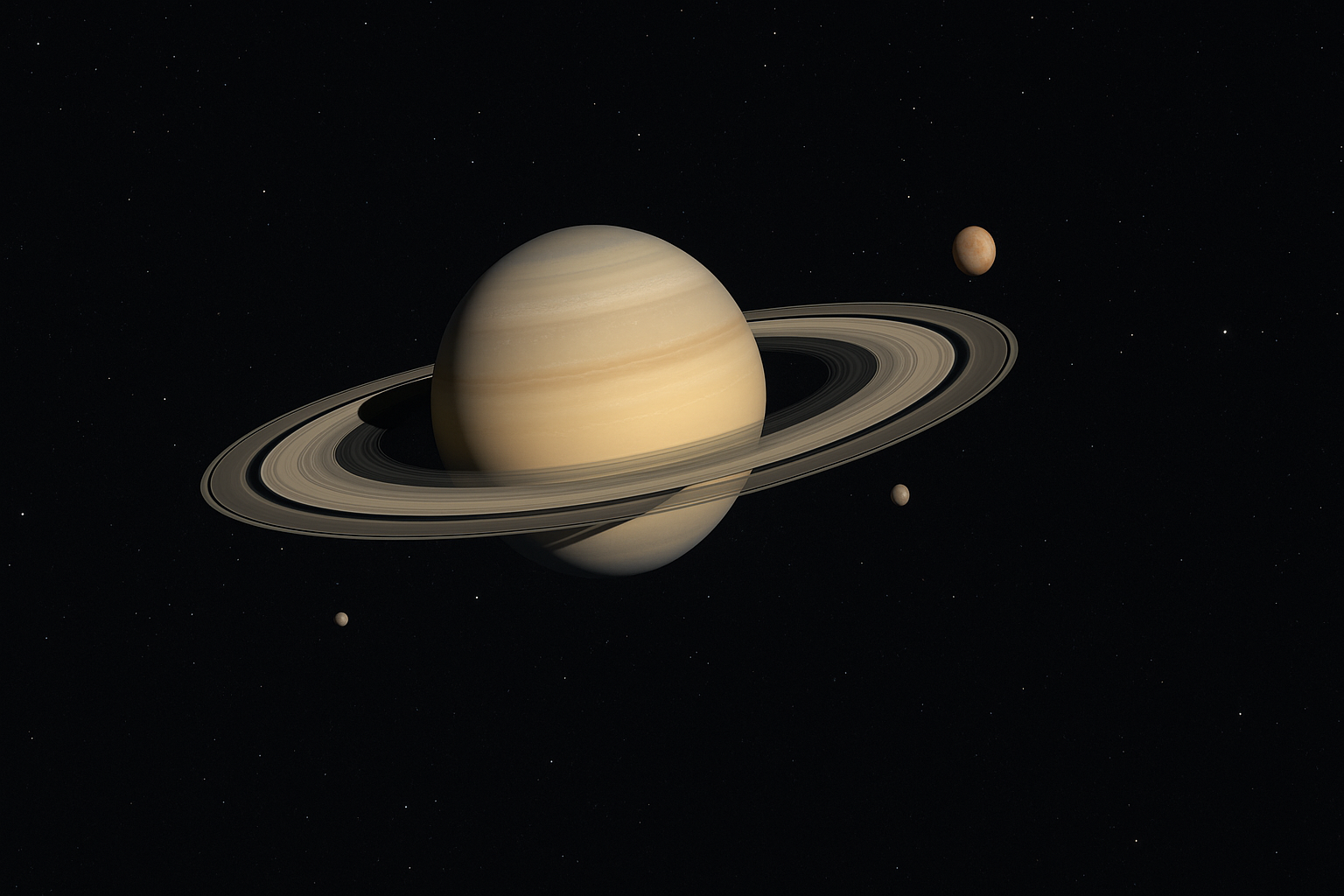
Saturn’s Moon Takeover Cosmic Archaeology in Motion
are not just moons.They are evidence.Many of them move backwards. Others follow tilted, chaotic orbits. Most are not smooth worlds, but irregular fragments shaped by collisions and gravitational encounters.
Each one is a clue.
This is not just astronomy.
It is cosmic archaeology.
The Moon Race: Saturn vs. Jupiter
These objects are not random debris.
They are records.
Records of impacts, captures, and gravitational interactions stretching back billions of years.
Irregular Worlds
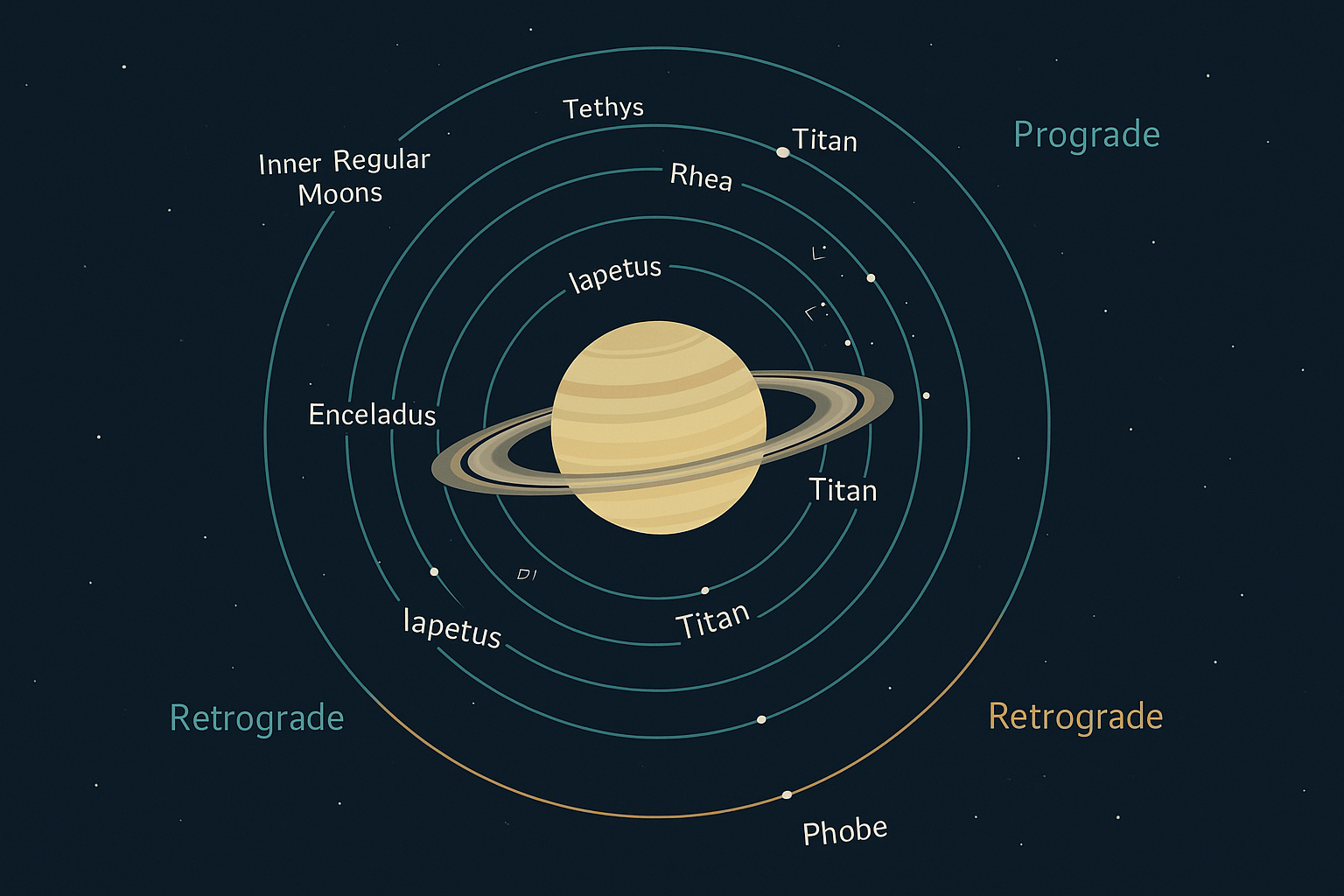
Diagram showing Saturn’s moons and their orbital paths, including retrograde and irregular satellites.
Their orbits are elongated. Tilted. Often retrograde.
This means they move in the opposite direction of Saturn’s rotation.
This is not a coincidence.
Such behavior strongly suggests that these moons were not formed alongside Saturn.
They were captured.
Most likely as asteroids or fragments that passed too close and became trapped by gravity.
Fragments of Lost Worlds

Visualization of a moon-shattering collision in Saturn’s early history forming irregular satellite clusters.
A larger parent body may have shattered in a collision.
The debris spread outward, forming clusters of smaller moons.
One example is the Norse group, a set of retrograde moons that likely originated from a single disrupted object.
Each fragment is a fossil.
Not of life, but of impact.
Why Saturn Holds So Many
Its position in the solar system also matters.
It lies closer to reservoirs of icy and rocky debris.
Jupiter, by contrast, tends to eject unstable objects more efficiently.
Saturn is more permissive.
Less a cleaner. More a collector.
Over billions of years, that difference accumulates.
Small Moons, Big Insights
They retain signatures of materials, collisions, and gravitational dynamics from the system’s formation.
By studying them, scientists can reconstruct how planets grow, how moons are captured, and how systems evolve.
Titan: The Exception
Larger than Mercury, with a dense atmosphere and stable liquid cycles of methane and ethane.
Upcoming missions such as NASA’s Dragonfly aim to explore it directly.
Its existence highlights a striking contrast.
Within one system, we find both shattered remnants and fully developed worlds.
A Record of a Violent Past
What we see today is not static.
It is the result of billions of years of change.
And with each new moon discovered, that story becomes clearer.
TL;DR
- Saturn has over 140 confirmed moons, more than any other planet
- Many are irregular and move in retrograde orbits
- These moons were likely captured or formed from collisions
- Moon families suggest past fragmentation events
- They act as records of early solar system evolution
References
- Sheppard, S. S. (2023). Irregular Satellites of the Outer Planets. Annual Review of Astronomy and Astrophysics.
- Jewitt, D., Haghighipour, N. (2007). Irregular Satellites of the Planets. Annual Review of Astronomy and Astrophysics.
- NASA Solar System Exploration. Saturn Moons Overview.
- Carnegie Science. Observational surveys of outer planet satellites.
Discussion
Are Saturn’s smallest moons the remnants of lost worlds… or the building blocks of future ones?

